
Stainless Steel Crowns
at Kids Teeth in Mt. Pleasant
Finding out your child needs a crown can feel overwhelming. You might wonder why it’s necessary, how it will affect your child, and what the next steps look like. At Kids Teeth in Mt. Pleasant, we guide you through it all. We offer stainless steel crowns (SSCs) in a comfortable, kid-friendly experience where you feel confident about your child’s care and your child feels at ease. Our pediatric dentists place crowns when a baby tooth needs more support than a filling can provide. Treatment is available at both our Johnnie Dodds and Park West offices.
What a Stainless Steel Crown Does for Your Child’s Tooth
Sometimes a filling just isn’t enough to keep a tooth working. When decay runs deep or part of the tooth breaks, it may lose too much structure. In this case, a stainless steel crown protects the whole tooth. It covers the top and wraps around the sides to hold everything together.
Baby teeth do more than smile. They help your child bite, chew, and speak clearly. They also hold space for adult teeth that arrive later. By placing a crown, we help keep a damaged tooth in place until it naturally falls out—and that helps your child avoid bigger dental problems down the road.
What is a Stainless Steel Crown?
A stainless steel crown is a small silver cap that fits over a baby tooth. Dentists have used them for decades because they are strong, safe, and reliable. These crowns handle chewing, resist wear, and stay in place until the baby tooth is ready to fall out.
At Kids Teeth, we use stainless steel crowns mostly on molars. These back teeth do most of the chewing and are harder to see when your child smiles. We size the crown to fit, cement it on the tooth, and check the bite to make sure it feels right. The crown works like a shell, sealing and strengthening the damaged baby tooth.
When We Recommend a Stainless Steel Crown
We may suggest a crown for several dental concerns. Common reasons include:
- A large cavity that removes too much of the tooth
- A tooth that had pulp treatment and needs extra strength
- A tooth that cracked or broke, but still has enough root to save
- Repeated fillings on the same tooth that now needs lasting support
In these cases, a crown gives the tooth a better chance to stay in place until it’s time to fall out. We look at your child’s age, which tooth is involved, and how long it needs to stay in the mouth. Then we walk you through your options, explain our recommendation, and answer every question. A stainless steel crown does not mean something went wrong. It means you’re choosing to protect your child’s smile today and in the future.
What to Expect During the Crown Procedure at Kids Teeth
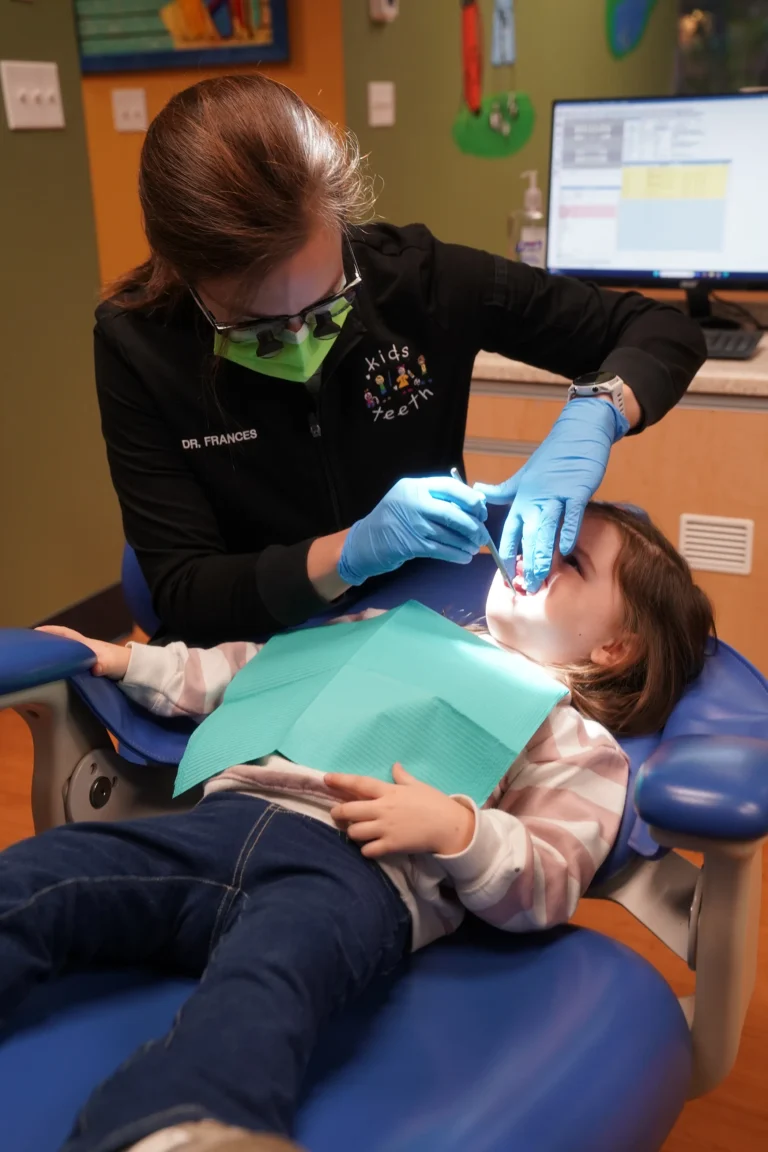
We work carefully to keep your child calm and comfortable throughout the visit. First, we numb the area around the tooth using a local anesthetic. We describe each step using words your child understands so they know what’s happening and when. Once the area is numb, we remove the decayed part of the tooth and shape what remains.
After shaping, we test different sizes of crowns until we find the right match. Each crown is like a puzzle piece that needs to fit just right. We adjust the crown, fill it with dental cement, and place it on the tooth. We clean off any extra cement and fine-tune the bite so it feels normal when your child closes their mouth.
We also know that dental visits can be tough for some children. We use calm voices, visual distraction tools, and behavior techniques throughout the appointment. If your child has higher anxiety or special healthcare needs, we talk with you about what supports might help, including the option of mild sedation. Most kids bounce back quickly after the visit, ready to eat and play once the numbness fades.
Why Stainless Steel Crowns Work Well for Baby Teeth
There’s a reason dentists trust stainless steel crowns. They form a full seal around the tooth, lowering the chance of more decay or infection. Crowns hold up better than large fillings and don’t break as easily, which means fewer trips back to repair the same spot.
These crowns keep chewing efficient and help with clear speech. They also save room in the mouth for adult teeth. When baby teeth fall out too soon, the other teeth can start shifting—and that makes it harder for permanent teeth to line up well later. Crowns help keep things in place until it’s time for those adult teeth to grow in.
Most of the time, since they go on back molars, you won’t see the crowns when your child smiles or laughs. We focus on protection and comfort so your child can chew and speak without pain.
How to Care for a Child’s Crown at Home
Even though crowns are strong, daily brushing and flossing stay important. Clean teeth and healthy gums help the crown last as long as the baby tooth stays in the mouth. Help your child brush twice a day with fluoride toothpaste and floss between teeth once a day. Pay special attention to the gumline around the crown—this is where food and plaque often hide.
We also recommend watching what foods your child eats. Sticky or hard foods—like gum, taffy, ice, or hard candy—can tug on crowns or strain teeth. If your child does eat these foods, guide them to chew on the other side. A little soreness at first is normal and often fades quickly. If the crown feels loose or your child experiences unusual pain, give us a call. At regular checkups, we’ll make sure that the crown and surrounding gums stay in good shape.
Our Approach at Kids Teeth: Long-Term Dental Health
Every crown we place fits into a bigger plan for healthy growth. By saving the tooth, we support a healthy bite and reduce the need for braces or more complex treatment later. We track that baby tooth at future visits and keep an eye out for when it starts to loosen. Usually, the crown comes out attached to the tooth, just like a regular tooth fairy moment—only silver instead of white.
We use stainless steel crowns along with strong preventive care: sealants, cleaning visits, and oral hygiene education. When all of these work together, your child has a much better chance of avoiding future problems.
Serving Families Across Mt. Pleasant
Our offices are easy to reach from many parts of Mt. Pleasant. The Johnnie Dodds office works well for families near downtown Charleston or central Mt. Pleasant. The Park West location supports the northern part of Mt. Pleasant and nearby neighborhoods, with quick access from schools, sports fields, and home.
Each office offers the same high level of care, warm atmosphere, and focus on children. You can view photos and directions on our website, which helps your child get comfortable before arriving. Both offices support your family through crown visits and everything beyond. If your routine changes, you’re free to switch locations while staying with the same trusted care.
Stainless Steel Crowns – Frequently Asked Questions
Will my child feel pain while getting the crown?
We use local numbing so your child should not feel pain, just pressure. After the appointment, mild soreness is common and short-lived.
How long does the crown last?
The crown stays on the tooth until the tooth gets loose and ready to fall out. Stainless steel crowns do well under daily wear and tear.
What happens when the baby tooth falls out?
The crown stays on the tooth. When the baby tooth falls out on its own, the crown comes out with it.
Are stainless steel crowns safe?
Yes. They meet dental safety standards and have been used for many years across the world in children’s dentistry.
Can we choose another treatment instead?
Sometimes, yes. It depends on how much of the tooth is left and your child’s age. We’ll walk you through every option we think works, along with what we expect from each.
Let’s Take Care of That Tooth—Before It Becomes a Bigger Problem
Strong baby teeth help your child grow, learn, and smile without pain. When decay or injury puts those teeth at risk, a stainless steel crown gives them protection that lasts. Trust our pediatric dentists in Mt. Pleasant to assess, explain, and treat with care that matches your child’s needs and your peace of mind.
If you’re worried about a damaged baby tooth or your child has been told they might need a crown, don’t wait. We encourage you to start the conversation today. Acting now means less discomfort, fewer problems later, and one less worry for you.