
Guidance for Growing Smiles
at Kids Teeth in Mt. Pleasant
Children’s smiles grow and shift quickly between ages six and ten. Permanent teeth start coming in, baby teeth loosen, and jaws work hard to keep up. It’s during these years that bite problems, crowding, or jaw alignment issues may start to show. You might wonder whether now is the right time to take action or if you should wait. Our guidance for growing smiles offers a path to guide growth early before things become more difficult to treat.
At Kids Teeth in Mt. Pleasant, we check your child’s development during regular visits and offer early assessments when needed. Both our Johnnie Dodds and Park West offices provide support for families looking to start early orthodontic care, and we have close relationships with trusted orthodontic partners in Mt. Pleasant for referral when needed.
What Do We Mean by "Guidance for Growing Smiles" and Why Does It Matter?
“Guidance for Growing Smiles” means helping your child’s teeth, jaws, and bite develop in the healthiest way possible—before small concerns turn into bigger problems. At Kids Teeth, we monitor early growth and alignment, provide treatments like palatal expanders, space maintainers, extractions, and custom appliances, and help protect developing smiles with night guards and sports guards. While we don’t provide orthodontic treatment in-house, we work closely with trusted orthodontic partners in Mt. Pleasant when braces or aligners are needed. This proactive approach can reduce future complications, support proper development, and set your child up for a healthier, more confident smile.
Signs Your Child Might Benefit From Guidance
Some signs are easy to spot. If you’ve noticed crowding, front teeth sticking out, or bite problems, it may be time to ask about an evaluation. Common things to watch for include:
- Crowded or overlapping teeth soon after the first permanent front teeth come in
- Crossbites, when upper teeth bite inside lower ones either in the back or front
- Front teeth that angle out and could be injured during play or sports
- Jaws that shift from side to side while closing
- Long-lasting thumb or pacifier habits that affect how teeth line up
During routine checkups, we look closely at these issues. If we see something outside of normal development, we’ll talk with you about options. Timing matters, and we match treatment to your child’s current growth stage.
How Kids Teeth Evaluates Young Smiles
At Kids Teeth, evaluating young smiles goes beyond a routine checkup — it’s a comprehensive, growth-focused assessment led by experienced pediatric dental specialists. We use advanced technology like digital X-rays and 3D scanners to closely monitor tooth development, jaw growth, spacing, and bite, often identifying concerns long before they become more complex. Our team combines clinical expertise with child-friendly imaging tools to make evaluations accurate, comfortable, and easy for parents to understand. This allows us to create personalized, proactive plans that support healthy development and long-term oral health.
Common Treatments
Depending on your child’s development, there are many options for guiding their smile. Common treatments include:
- Space maintainers: These hold open a gap when a baby tooth falls out too early, so the adult tooth has space to come in without crowding.
- Palatal expanders: These widen a narrow upper jaw, creating more room and helping the bite fit better.
- Guidance: This may include monitoring growth over time, using simple appliances, or recommending early interventions to encourage proper alignment and healthy jaw development.
- Extractions: In some cases, removing a baby tooth or overcrowded tooth can help prevent more serious alignment issues and make room for adult teeth to erupt correctly.
- Habit appliances: These help stop thumb sucking or reposition the lower jaw to support better growth.
Each child’s plan depends on their specific needs. Our team carefully evaluates your child’s growth, explains all options in clear, parent-friendly terms, and creates a personalized plan designed to support healthy, confident smiles as they grow.
Benefits for Children and Families
Starting early brings several useful advantages. Children may notice more comfort when chewing or talking. You as a parent may see fewer dramatic shifts in the smile over time. Key benefits include:
- Widening jaws before they stop growing
- Creating space so adult teeth have room to erupt
- Lowering the risk of dental injuries in kids with front teeth that stick out
- Helping stop habits that shift teeth or affect the bite long-term
- Smoothing the path for any future braces and reducing the length of treatment later
We always tailor guidance to what best fits your child’s individual needs, taking into account their age, emotional readiness, overall health, and the complexity of the concern. Our goal is to support healthy growth, improve function and comfort, and help developing teeth and jaws work together more naturally. Thoughtful early guidance can also reduce strain on teeth and jaw joints, lowering the risk of future problems and supporting a more stable, confident smile as your child grows.
Maximizing Your Child’s Comfort
We know comfort and confidence go together. That’s why we explain each step in ways your child can understand. We use real-life pictures, models, and simple words during visits to help them know what’s happening and why.
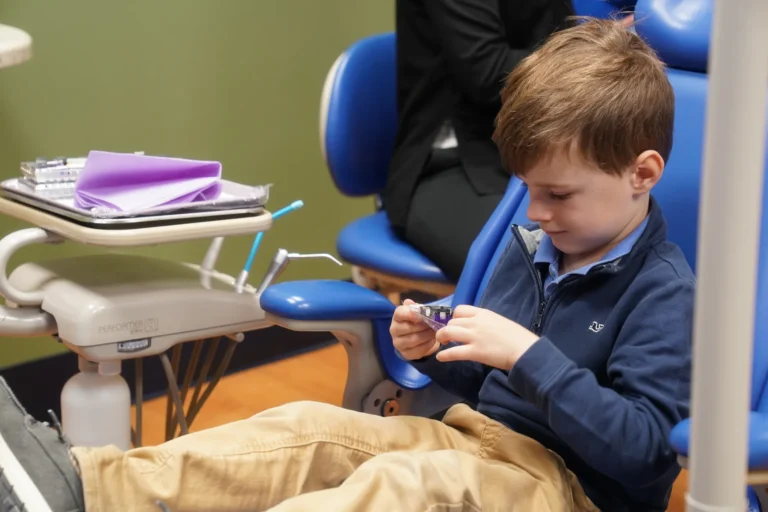
If your child feels unsure, we create a slower pace. We might let them hold a model appliance or practice sitting for short, easy visits before starting a treatment plan. Our office design and approach help reduce stress. We want both your child and you to feel ready—not rushed—before beginning any treatment.
Treatment for "Shark Teeth"
Shark teeth happen when a child’s permanent teeth begin coming in behind their baby teeth before the baby teeth fall out, creating a temporary double row of teeth. In many cases, this is a normal part of development and resolves on its own as the baby teeth loosen and fall out naturally. At Kids Teeth, we closely monitor eruption patterns, spacing, and crowding to determine whether any action is needed. If a baby tooth isn’t loosening on its own or crowding becomes a concern, we may recommend simple interventions—such as encouraging wiggling at home or, in some cases, a gentle extraction—to help the permanent teeth move into a healthier position. Our goal is to guide natural development while preventing future alignment or spacing problems.
How Early Guidance Fits Into Long-Term Orthodontic Planning
Early guidance plays an important role in setting the foundation for healthy, well-aligned smiles over time—even before orthodontic treatment is ever needed. By monitoring growth, spacing, and jaw development at a young age, we can address concerns early, reduce the risk of more complex issues later, and help adult teeth erupt into healthier positions.
This proactive approach may simplify future orthodontic care, shorten treatment timelines, or, in some cases, reduce the need for more extensive correction altogether. When orthodontic treatment becomes appropriate, we share detailed records and insights with trusted orthodontic partners to support seamless, well-informed care.
The goal is always the same: support natural development now while keeping long-term smile health and alignment in mind.
Guidance for Growing Smiles in the Context of Mt. Pleasant Life
We understand how busy families in Mt. Pleasant stay—school carpools, weekend tournaments, time on the water. That’s why interceptive orthodontics needs to flex with your schedule, not fight it. Our two offices—Johnnie Dodds and Park West—sit close to neighborhoods and schools, which makes fitting in care easier.
We also look at your child’s age, growth timing, and activity level when planning treatment. Whether we suggest an expander, space holder, or minor appliance like a night guard, we find times that keep your family’s routine in mind and keep your child from missing what they enjoy most. That way, early care works with your child’s life, not against it.
Frequently Asked Questions
At what age should I consider the development of my child's growing smile?
Ask as soon as you notice bite issues, crowding, or shifting jaws. Many kids benefit from evaluation around age seven, though age isn’t the only factor.
Do these treatments mean my child won’t need braces later?
PLACEHOLDER
How long does it take?
It depends on the device and the issue. Expanders or limited braces may last a few months up to a year. We walk through all timelines before starting anything.
Will these appliances hurt?
Some pressure is common at first. Most children get used to appliances within days. If pain happens or lasts too long, we check the fit and make changes.
Do we need to start right away?
Not always. We explain when treatment makes sense and what we’d expect with or without it. You set the pace based on answers, timelines, and your child’s readiness.
Get Ahead of Potential Problems Before They Grow
The early years give us a small window to shape a stronger, more balanced smile. Interceptive orthodontics at Kids Teeth helps spot crowding, crossbites, and jaw problems before they grow into bigger issues. Your child benefits from early support that fits into Mt. Pleasant’s active lifestyle—with less stress later.
Don’t wait until little problems become major ones. If you’re ready to take a first step, start a conversation with us today. We’re here to guide growth when it matters most, right from your child’s next visit.